
Conversation beyond the course book
English speaking clubs for schools.
Students who score well on paper often freeze the moment they have to speak. Weekly speaking clubs give them somewhere to practise real conversation — in small groups, with an experienced British native speaker, and with no marks attached.

The exam freeze
Strong on paper. Silent in the speaking test.
Almost every English department recognises this student. The gap is not knowledge — it is time spent actually speaking.
Grammar is not fluency
Students can complete the exercise correctly and still take ten seconds to build the same sentence out loud. Only regular speaking closes that gap, and a full timetable rarely leaves room for it.
Cambridge and IELTS speaking
The speaking papers reward exactly what clubs practise: extending an answer, giving reasons, reacting to a partner and keeping going without long pauses.
Natural pronunciation and rhythm
Regular exposure to a native speaker helps with the things textbooks cannot teach — stress, intonation, linking, and the confidence to be understood.
What is it?
A practical addition to English lessons.
An online English speaking club gives students an opportunity to step away from the course book and use English in a freer, more natural way.
Students meet online once or twice a week, but it is not a random conversation. Each 60-minute session follows a structured topic with questions and activities designed to keep the group speaking.
A British native-speaker host models natural English, invites every learner into the discussion and keeps the activity moving. Nothing is graded, which is usually why the quieter students start talking.
What students practise
More than answering one question.
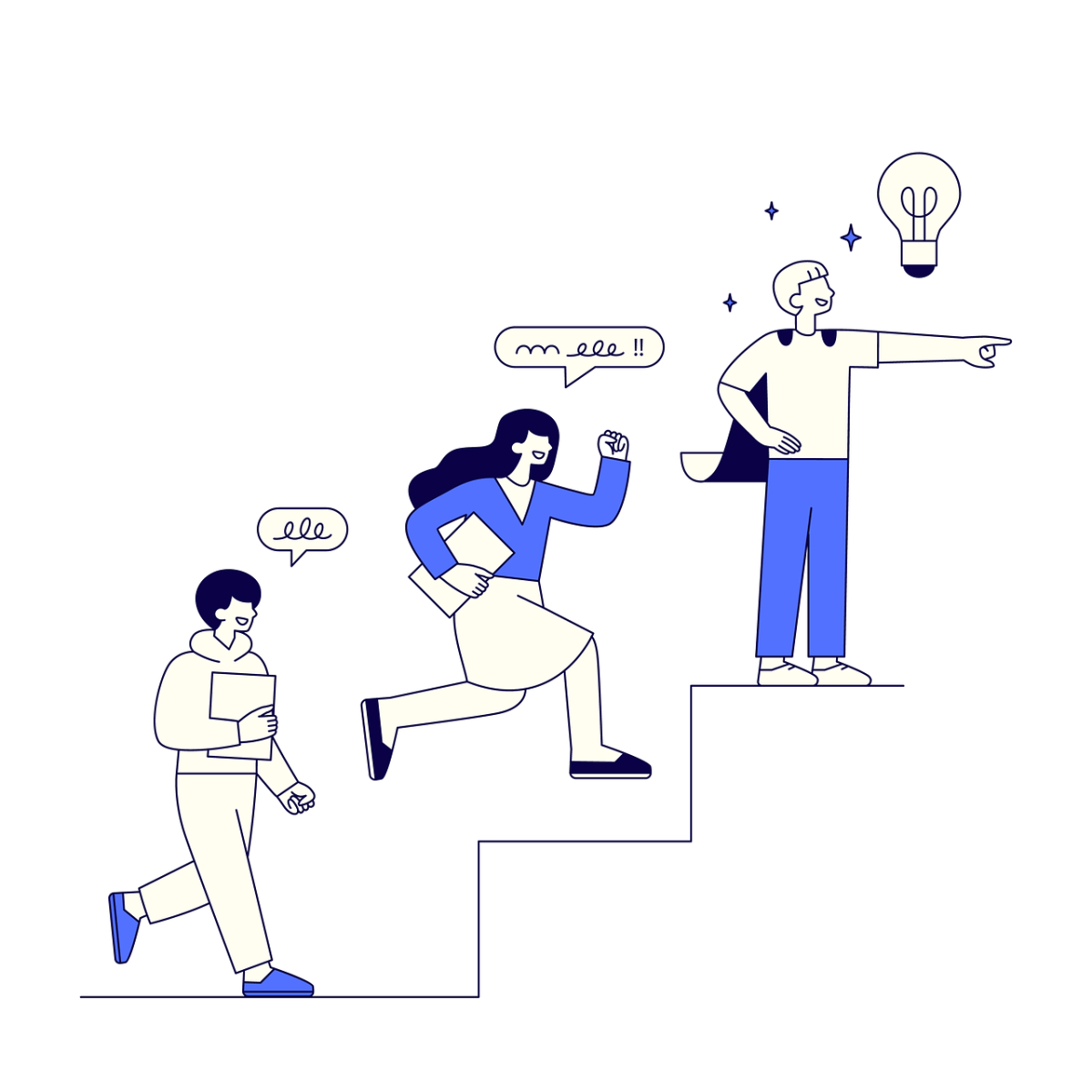
Explain ideas
Give reasons, examples and longer answers in real time, rather than a single memorised sentence.
Listen and react
Understand classmates, ask relevant follow-up questions and keep a conversation moving without a script.
Work as a group
Compare perspectives, make decisions together and solve speaking tasks as a team.
Working with your teachers
The club supports the lesson, it does not replace it.
Your English teachers keep the curriculum, the assessment and the relationship with the students. The club is the place those students get to use what they have been taught, with somebody who is not marking them.
If a teacher wants the club weighted towards an upcoming exam, a particular topic area or a set of vocabulary the class has just covered, that is easy to build in — just tell us before the week starts.
Because the club runs online, students can join from a classroom with one screen, from the computer room, or from home in the evening. Schools in smaller towns are not at a disadvantage.
How it works
From first email to first club.
Tell us about the students
Their age, approximate English level, how many there are and what you would like them to get better at.
Book a trial club
A single 60-minute session for £20 so students and teachers can see the format first.
Agree a weekly slot
We fix a regular day and time and split students into groups of up to six by level.
Clubs run weekly
Students receive the Zoom link. Topics and materials are prepared in advance each week.
Invoice monthly
One invoice at the end of the month. Pause over holidays and restart when term does.
Weekly pricing
Small-group speaking for your students.
Each group has a maximum of six students and each speaking club lasts 60 minutes. Prices include all preparation, materials and hosting.
| Weekly groups | Speaking time | Price per week |
|---|---|---|
| 1 group | 1 x 60 minutes | £40 |
| 2 groups | 2 x 60 minutes | £70 |
| 3 groups | 3 x 60 minutes | £90 |
| 4 groups | 4 x 60 minutes | £100 |
| Trial speaking club | 1 x 60 minutes | £20 |
Questions
Things schools usually ask.
What ages is this suitable for?
It works best from around 11 upwards. Younger learners can join, but they need a slightly different format and a smaller group, so tell us the age range and we will adjust.
What level do students need?
Roughly A2 and above. Where a class covers a wide range of levels we split it into separate groups, because mixing a strong B2 speaker with a nervous A2 speaker helps neither of them.
Does this help with Cambridge or IELTS speaking?
Yes, and it is one of the most common reasons schools get in touch. The clubs build the underlying skills the speaking papers test — extending answers, giving reasons, interacting with a partner. We can weight topics towards exam themes if you ask.
Do our teachers need to attend?
Not at all, though they are welcome to. Most schools leave the club to run on its own and simply hear about it from the students afterwards.
Is anything graded?
No. Nothing is marked and there is no homework. That is deliberate — removing assessment is usually what gets the quieter students speaking.
What happens during school holidays?
Clubs pause and you are not charged. Tell us the term dates and we will work around them.
Where we work
Speaking clubs for schools across the region.
Each country page covers the local picture — what drives demand for spoken English there, how the time difference works, and which cities we already run clubs in. Clubs run online, so anywhere else is fine too.
Also available
Speaking clubs for other groups.
Let your students speak.
Tell us the students' age, approximate English level, group size and preferred weekly times.